Rust After a Collision: How Even Small Dents Can Lead to Big Problems
After a collision, it’s easy to focus on the obvious damage. A small dent in the door. A scratch across the bumper. A paint chip near the wheel well. If the vehicle still drives fine, many drivers assume the damage is purely cosmetic.
The reality is very different.
Even minor collision damage can expose bare metal beneath your vehicle’s paint. Once that protective barrier is compromised, rust can begin forming faster than most people realize. Left untreated, what starts as a small dent or scratch can lead to corrosion, structural weakening, and a significant drop in vehicle value.
At Elevated Auto Body, we see it all the time: small issues that could have been simple repairs turning into major body restoration work because rust was allowed to spread.
Let’s break down why this happens and why acting quickly matters.
How Paint Protects Your Vehicle
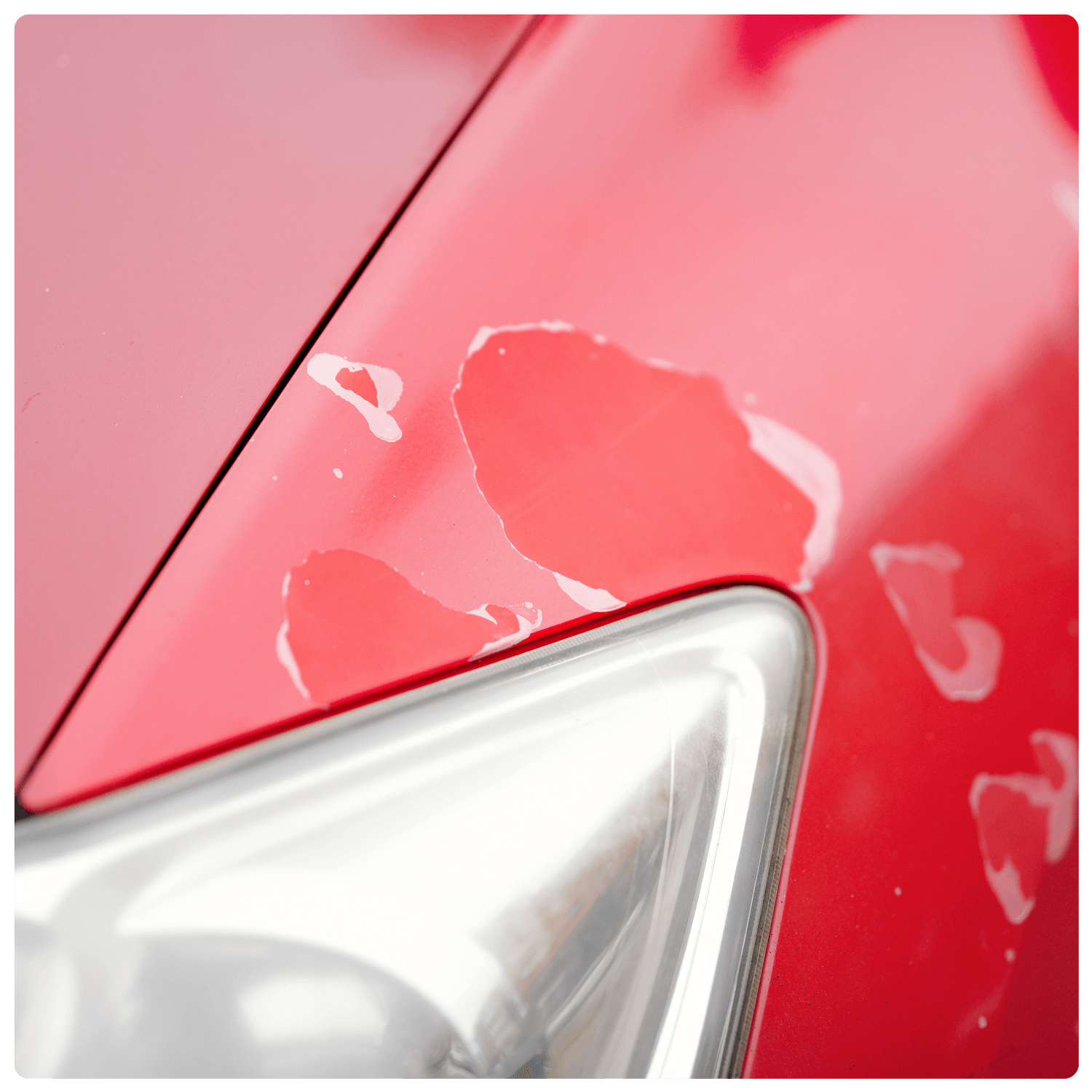
Your car’s paint isn’t just about color and shine.
It’s part of a multi-layer protective system designed to shield the metal frame and panels from moisture, salt, road debris, and air.
Most vehicles have:
A primer layer that bonds to the metal
A base coat that provides color
A clear coat that seals and protects everything underneath
When a collision chips or cracks through these layers, the metal underneath becomes exposed. Even a hairline crack in the paint can allow moisture to reach the surface.
And once moisture meets exposed steel, oxidation begins. That’s rust.
Why Rust Spreads Faster After a Collision
You might think a tiny scratch isn’t a big deal. But collision damage creates ideal conditions for corrosion to accelerate.
Here’s why:
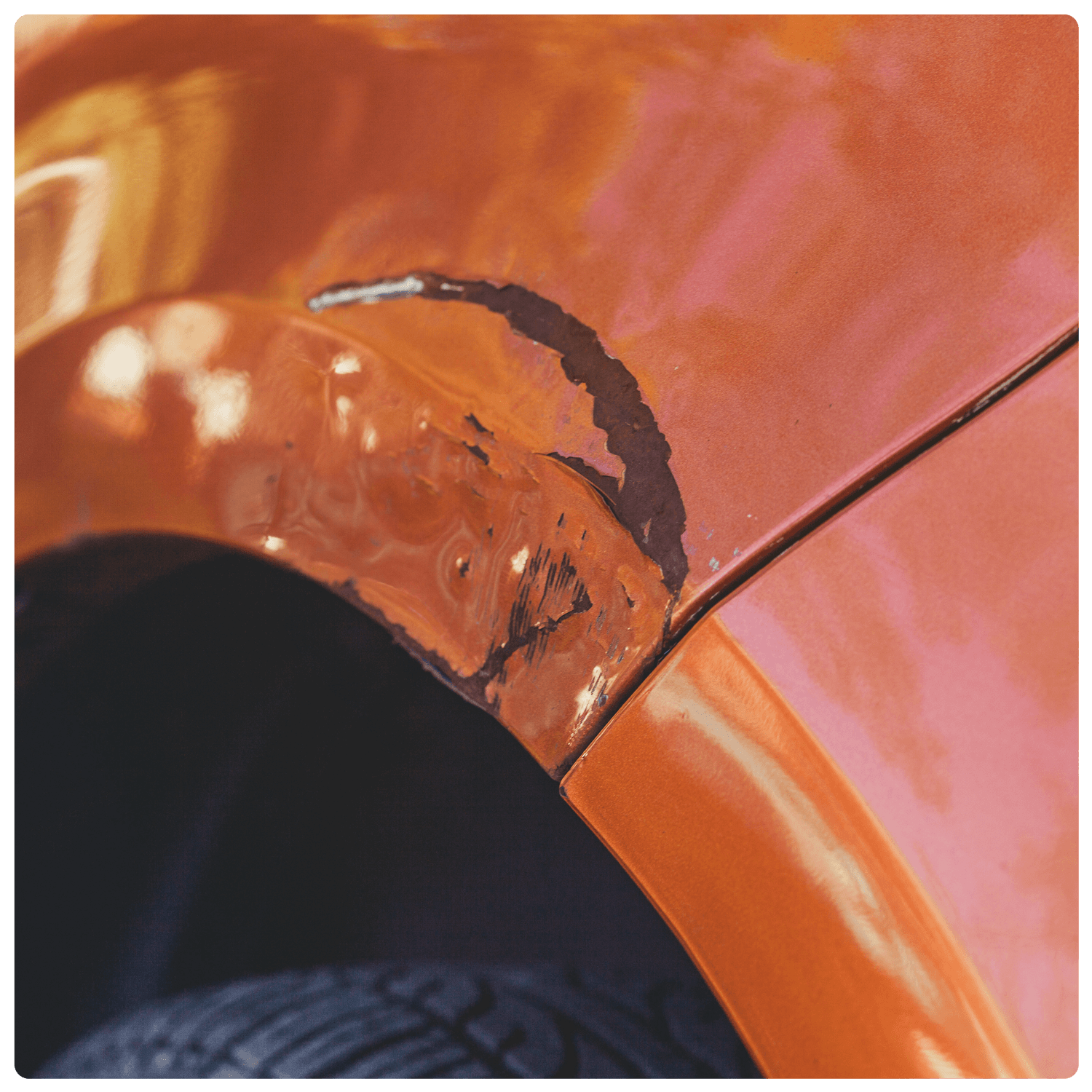
1. Microfractures in the Paint
Even if the paint doesn’t look severely damaged, impact can create tiny fractures that aren’t always visible. These microfractures allow moisture to seep under the paint layer, starting rust from the inside out.
2. Compromised Sealants
Modern vehicles use seam sealers and protective coatings in joints and panel connections. A collision can crack or displace these protective barriers, leaving hidden areas vulnerable.
3. Trapped Moisture
Dents and panel distortions can create pockets where water collects. Once moisture is trapped, corrosion accelerates, especially in Colorado’s fluctuating temperatures.
4. Road Salt and De-icing Chemicals
If you’re driving in winter conditions, salt dramatically speeds up oxidation. A small chip combined with winter road treatment can multiply corrosion damage in a single season.
The Three Stages of Rust Damage
Understanding how rust progresses helps explain why early repair is critical.
Surface Rust
This is the earliest stage. It may appear as bubbling paint, discoloration, or a small reddish spot. At this stage, the damage is still localized and typically easy to repair.
Scale Rust
If left untreated, rust penetrates deeper into the metal, causing flaking and pitting. The metal weakens and repairs become more extensive.
Structural Rust
In advanced cases, rust can compromise structural components of the vehicle. This impacts safety, frame integrity, and resale value. At this stage, repairs are significantly more complex and expensive.
What could have been a minor paint correction can eventually require panel replacement or fabrication work.
Why “Cosmetic” Damage Isn’t Just Cosmetic
Many customers tell us, “It’s just a small dent, I’ll deal with it later.”
Here’s what we explain: collision-related paint damage isn’t just about aesthetics. It’s about protection.
A properly repaired panel restores:
Paint integrity
Corrosion resistance
Structural strength
Long-term vehicle value
Ignoring minor damage often leads to higher repair costs down the road.
How Professional Collision Repair Prevents Rust
When Elevated Auto Body repairs collision damage, we don’t just smooth out dents. We restore the full protective system of your vehicle.
Our process includes:
Proper metal preparation
Corrosion treatment when needed
High-quality primer application
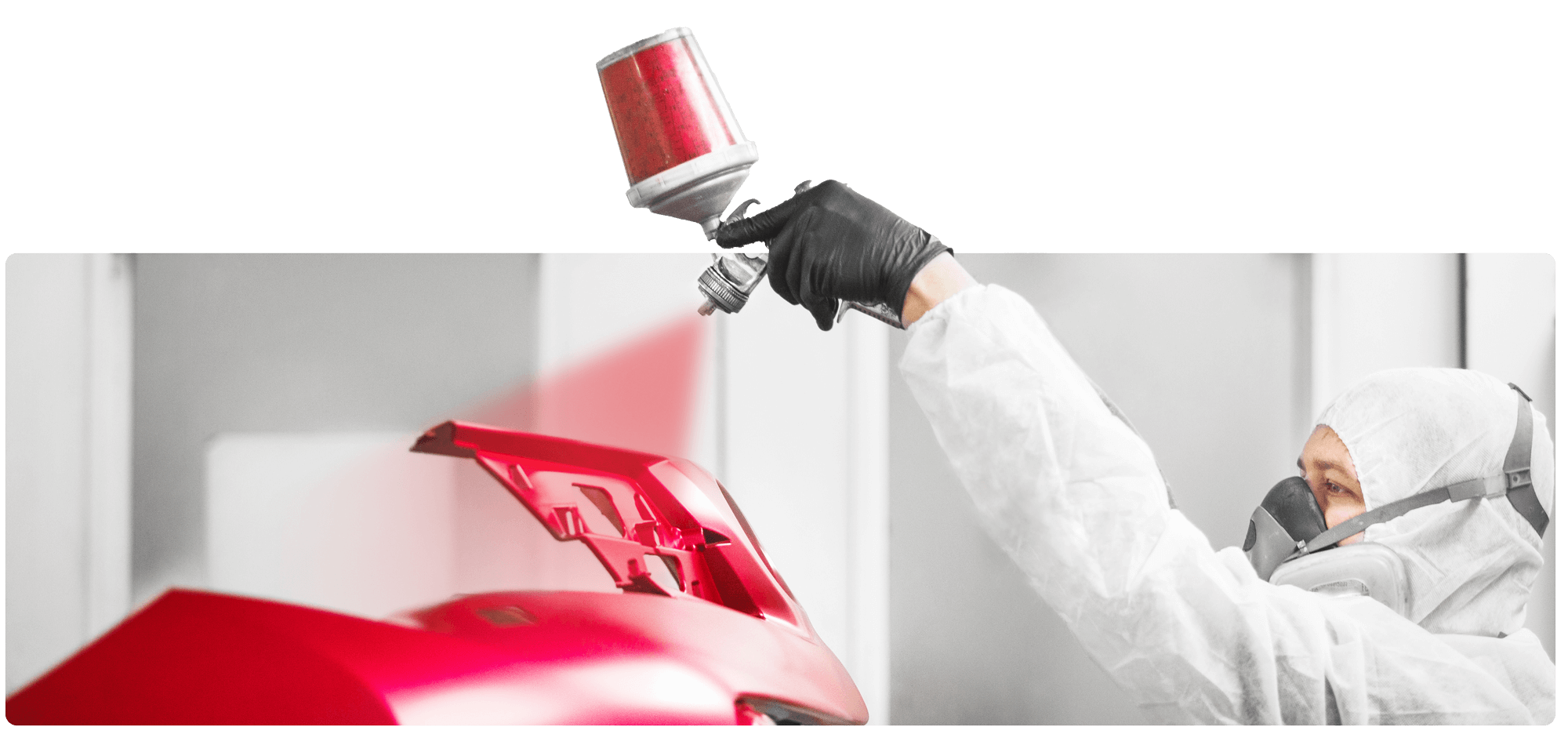
Professional paint matching and refinishing
Clear coat sealing for long-term durability
This ensures the exposed metal is fully protected, not just covered. We also inspect surrounding areas for hidden damage or compromised coatings that may not be immediately visible.
Protecting Your Vehicle’s Resale Value
Rust is one of the biggest red flags for buyers and dealerships. Even small areas of corrosion can significantly lower trade-in value.
A vehicle with documented professional collision repair is far more attractive than one with visible rust damage. Proactive repair protects both the look and the long-term financial value of your car.
If you plan to sell or trade in your vehicle in the future, addressing collision damage early is one of the smartest investments you can make.
When Should You Schedule an Inspection?
You should consider a professional inspection if you notice:
Chipped paint after a minor accident
Scratches that expose metal
Bubbling or discoloration around a dent
Cracks in paint near panel seams
Small rust spots forming after a collision
Even if you’re unsure whether the damage is serious, a quick evaluation can prevent long-term problems.
Don’t Let a Small Dent Become a Big Problem
Collision damage doesn’t always look urgent. But when paint protection is compromised, rust doesn’t wait.
At Elevated Auto Body, we help drivers protect their vehicles from hidden corrosion and long-term damage. Addressing dents, scratches, and paint chips early ensures your car stays structurally sound, safe, and valuable.
If you’ve recently experienced a minor collision or noticed paint damage, schedule an inspection. A small repair today can prevent major restoration tomorrow.