Why Auto Paint Matching Is More Complicated Than Finding the Right Paint Code
Why Professional Auto Paint Matching Takes More Than a Paint Code
When your vehicle needs paintwork after an accident, it may seem like matching the color should be simple. Look up the factory paint code, mix the formula, spray the damaged panel, and you are done.
In reality, professional auto paint matching after collision repair is much more precise than that. The paint code gives technicians an important starting point, but it does not necessarily represent exactly how the paint on your vehicle looks today.
Age, sun exposure, previous repairs, the type of finish, and even the way the paint is applied can all affect the final appearance. That is why a professional refinishing process involves evaluating the existing finish, adjusting the color when necessary, testing the match, and often blending into nearby panels.
Why the Factory Paint Code Is Only a Starting Point
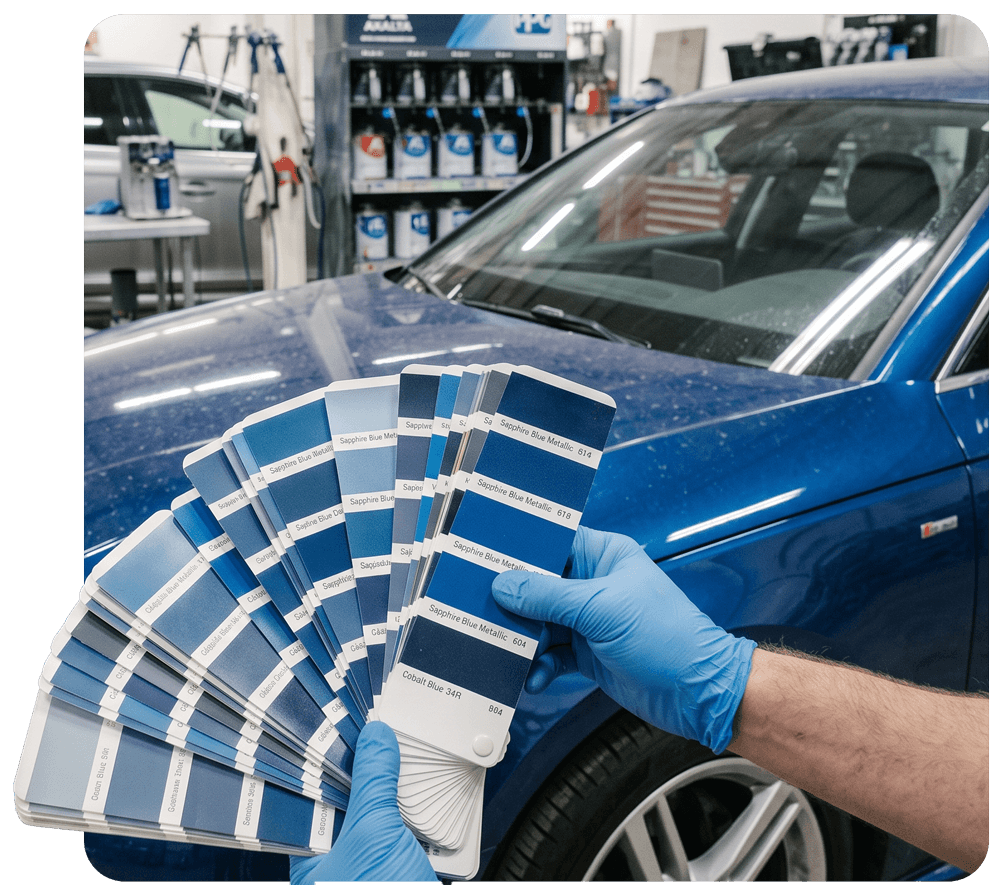
Every vehicle leaves the factory with a paint code that identifies its original color. Auto body technicians can use that code to access the manufacturer’s recommended paint formula.
The challenge is that vehicles with the same paint code do not always look identical.
Factory production can create slight variations within the same color. Paint manufacturers may also have multiple formulas, sometimes called variants, for one paint code based on differences that occurred during production.
Then the vehicle spends years outside the factory.
Sunlight, weather, mileage, washing, environmental exposure, and normal aging can gradually change how the finish appears. By the time a vehicle needs auto collision repair, the paint currently on the vehicle may look slightly different from the original factory formula.
Metallic and Pearl Paints Add Another Layer of Complexity
Modern automotive finishes can be surprisingly complex. Many colors contain metallic flakes, pearls, or multiple layers that interact with light.
With these finishes, matching the formula is only part of the job.
The appearance can change depending on:
The size and type of metallic or pearl particles
How those particles settle in the paint
Spray gun settings and technique
The distance and angle of application
The number of coats applied
Air pressure and drying conditions
The angle from which you view the finished panel
A silver, gray, pearl white, or metallic blue may appear to match from one angle but look noticeably different from another. Professional technicians evaluate the color from multiple angles and under different lighting conditions before considering the match complete.
Why Technicians Create Test Samples
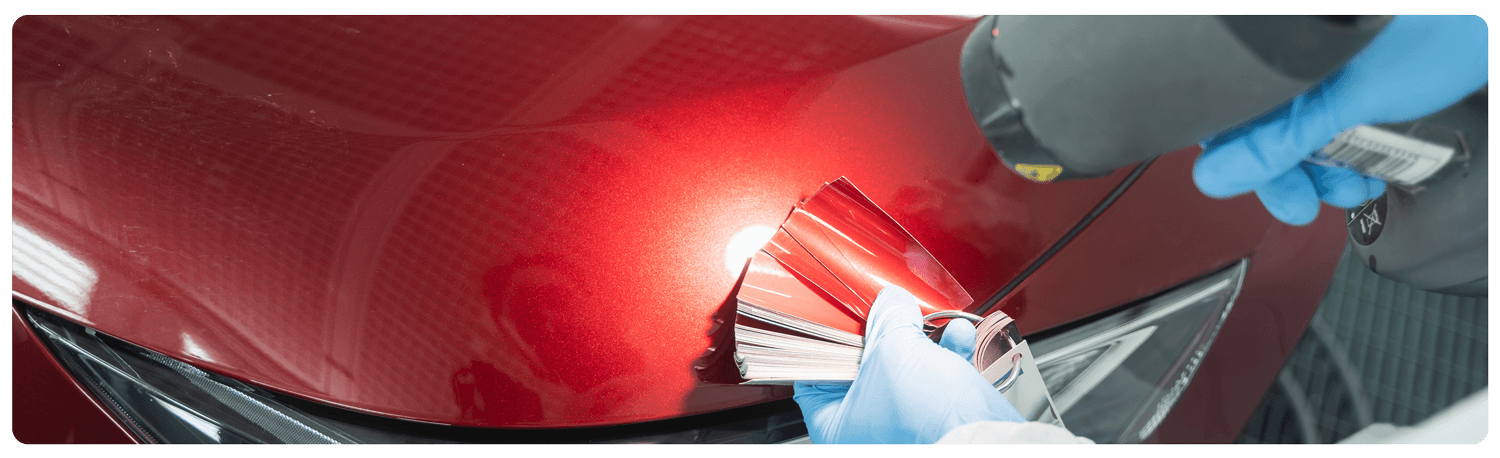
Before applying color to the vehicle, technicians may create a spray-out or test sample.
This allows the painter to compare the mixed color directly with the existing vehicle finish. If the color is slightly too dark, light, warm, cool, or otherwise different, the formula can be adjusted before the actual panel is refinished.
This extra step matters because even a small difference can become very noticeable once two painted panels are sitting next to each other.
A proper test gives the technician an opportunity to fine-tune the color before it reaches your vehicle.
Why Does the Body Shop Paint More Than the Damaged Panel?
One of the most common questions during auto collision repair is why surrounding panels may need refinishing when only one panel was damaged.
The answer is paint blending.
Instead of creating a hard transition between newly applied paint and the vehicle's existing finish, technicians may gradually blend the new color into an adjacent panel. This creates a much smoother visual transition and makes slight color variations far less noticeable.
For example, if a front fender needs replacement, simply painting the new fender and stopping at the edge could make a subtle color difference stand out next to the door. Blending the color into the neighboring panel helps the finish appear consistent across the vehicle.
Blending is not about unnecessarily painting additional parts of the car. It is a refinishing technique used to achieve a more seamless result.
Previous Repairs Can Affect Paint Matching Too
Sometimes the color technicians are trying to match is not actually the original factory finish.
If a panel was repaired or repainted previously, its color may already vary slightly from the original formula. That means technicians need to match the vehicle as it exists today, not simply assume the factory paint code will provide the correct answer.
A careful evaluation of the surrounding panels helps identify these differences before refinishing begins.
Preparation Matters Just as Much as Color
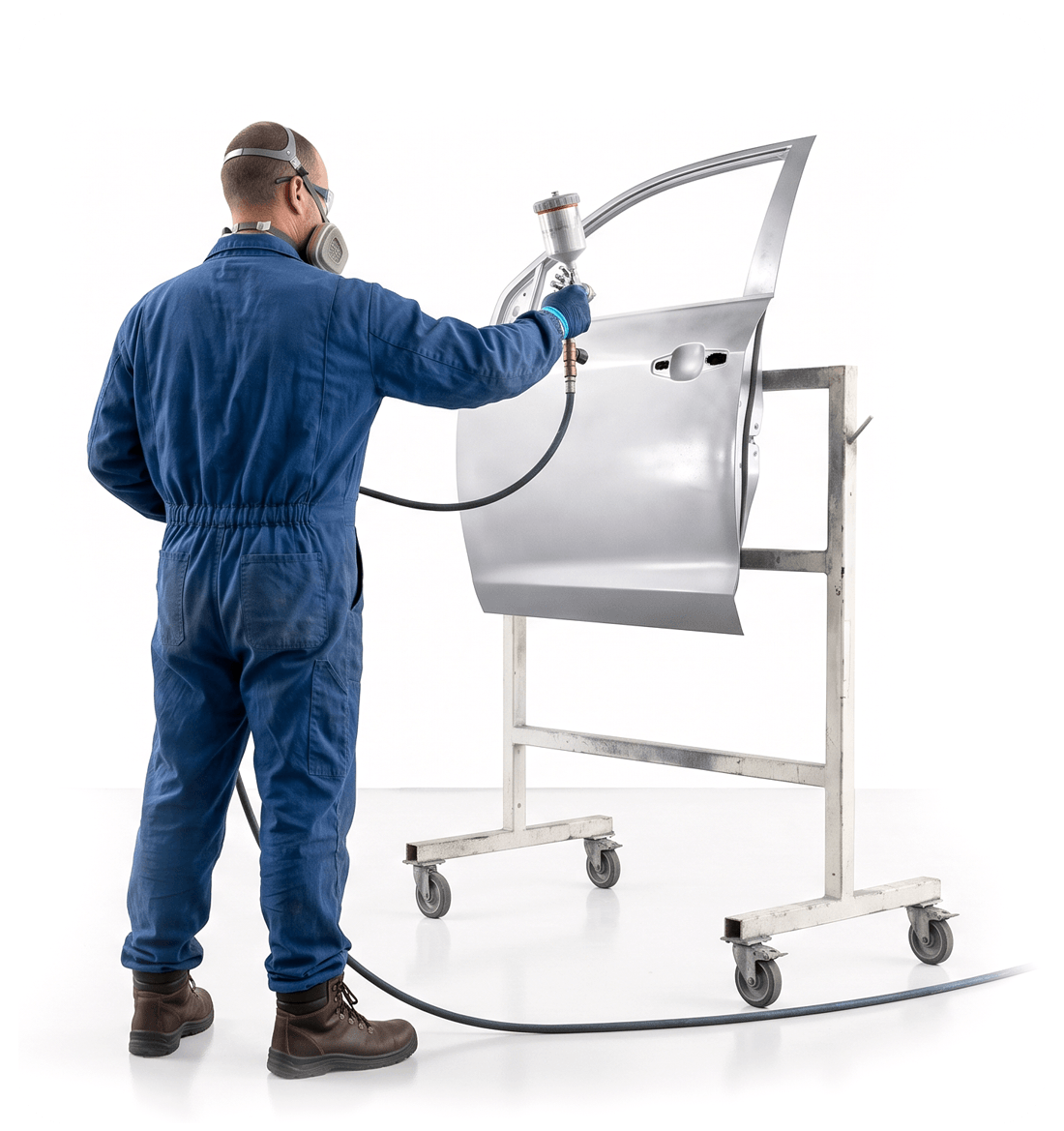
A good paint match will not look right if the surface underneath it is not properly prepared.
Professional refinishing includes much more than applying color. Depending on the repair, the process may involve repairing or replacing the damaged panel, sanding, priming, sealing, cleaning, applying basecoat, blending, applying clear coat, curing, and final finishing.
Each step affects how the finished repair looks.
Proper preparation helps create a smooth surface and consistent finish while the clear coat provides gloss and protection. Attention to these details is what helps the repaired area look like it belongs with the rest of the vehicle.
What Should a Quality Auto Paint Repair Look Like?
The best auto paint repair should not immediately draw your eye to the area that was repaired.
Color, metallic orientation, gloss, texture, and transitions between panels should work together so the repair blends naturally with the rest of the vehicle.
Achieving that result requires more than selecting the correct paint code. It takes skilled evaluation, careful preparation, precise application, and an understanding of how modern automotive finishes behave.
Professional Auto Paint Matching in Lafayette, Colorado
At Elevated Auto Body, we approach refinishing with the same attention to detail as the rest of the auto collision repair process. Our goal is not simply to repair the damaged panel. We want the finished vehicle to look cohesive, polished, and properly restored.
If your vehicle needs auto collision repair or auto paint repair in Lafayette, Louisville, Broomfield, or the surrounding area, contact Elevated Auto Body to schedule an estimate. We can evaluate the damage, explain the refinishing process, and help restore your vehicle's finish with careful, professional paint matching.